

The slow miles
6 Jun 2026
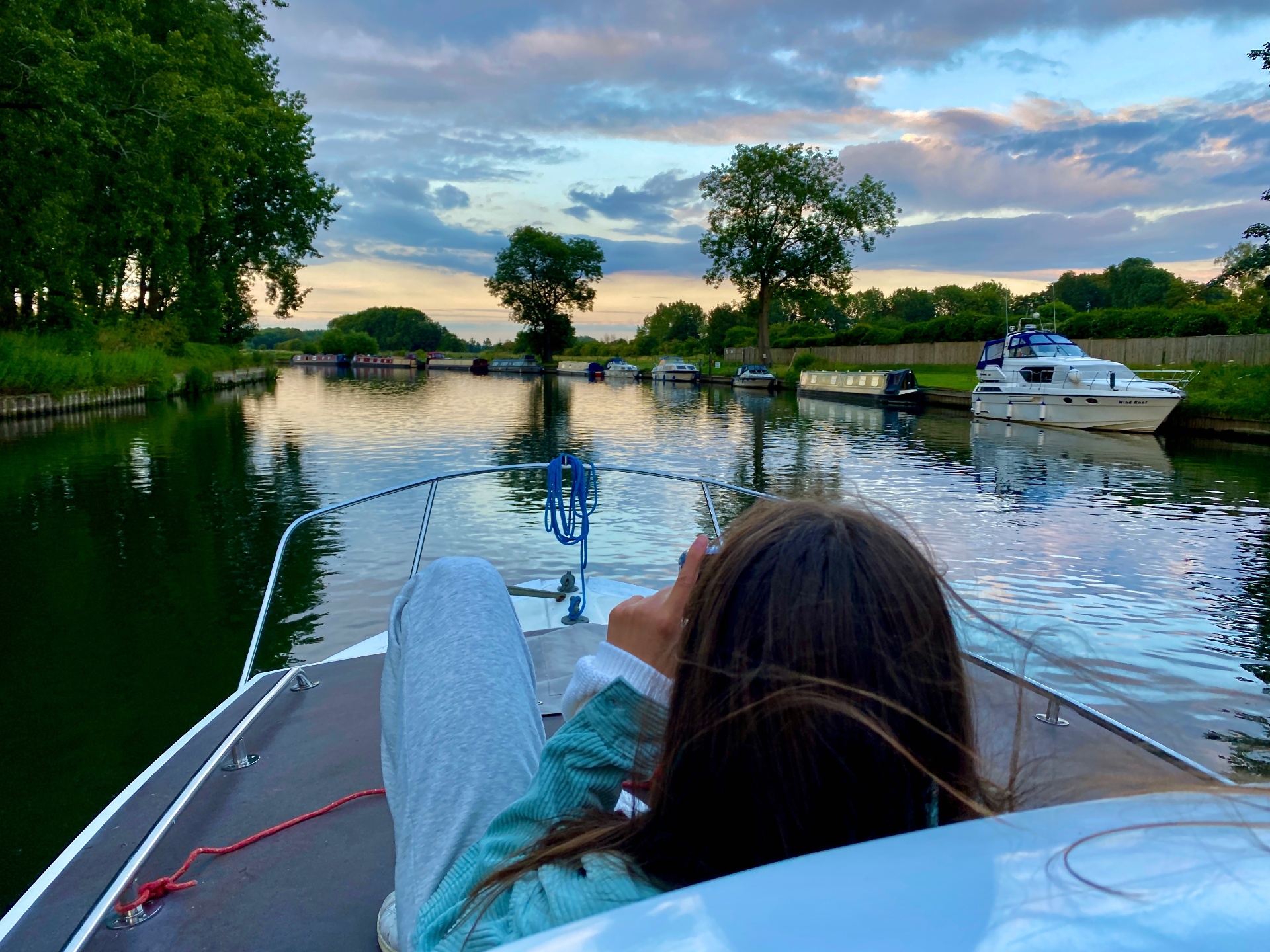
There are 2,000 miles of navigable waterway in Britain, and over 33,000 licensed boats on Canal & River Trust water alone. Most of those boats sit on their moorings for most of the year. We think that is about to change.
Somewhere on the Grand Union Canal right now, a 58-foot narrowboat called something like Wandering Star is sitting on its mooring. Its owner is at work in Coventry. The boat is clean, well-maintained, fully kitted out with gas, diesel, a charged battery, crockery and a decent coffee maker. It will sit there until the weekend, and possibly through the weekend too if something comes up.
This is not an unusual situation. It is, in fact, the overwhelming norm. The Canal & River Trust's 2025 Boat Count records more than 33,000 licensed boats on its waterways, the vast majority of them privately owned pleasure craft. Their owners love boating, but they also have jobs, families, and weekends that don't always go to plan. Most private narrowboats are used, in practice, for only a few weeks a year, commonly cited in the community as around three or four.
Meanwhile, interest in the UK's inland waterways has never been higher. Canal holidays have moved from niche to mainstream. The lockdown era discovery of slow travel, travel with pace rather than distance as the point, sent a generation of first-timers onto the waterways, and many of them never quite got it out of their system.
"A narrowboat holiday isn't really a holiday in the usual sense. It's a different relationship with time." The BoatStays Logbook, June 2026
But accessing that experience has always meant going through a hire fleet. You book a boat from a commercial operator, collect it from a boatyard, and set off with a laminated card explaining how not to hit the lock gates. The boats are functional. The holidays are genuinely good. But something is missing from the transaction.
What's missing is the boat's story.
A different kind of host
When a narrowboat owner shows you around their boat, the experience is entirely different. They know which burner runs hot. They can tell you about the time they got stuck at Braunston in a thunderstorm, or why the Angel in Henley is worth stopping for. They point out the birdlife on their favourite stretch of the Oxford Canal with the ease of someone who has watched the seasons change from the tiller for ten years.
That knowledge, and the sense of a boat genuinely lived in and loved, is what peer-to-peer hosting is built to preserve. It's the same reason a room in someone's home feels fundamentally different to a hotel room. The object is similar. The experience is not.
BoatStays was built on this observation. The supply exists, in the form of tens of thousands of privately owned narrowboats and river cruisers sitting on their moorings for most of the year, while their owners pay licence fees, insurance and mooring costs regardless of whether the boat moves. The demand exists too, in the growing numbers of people who want to spend time on the water, at prices they can actually afford, in a way that feels real.
The platform connects the two. Owners list their boat in their own words, at their own price, on their own terms. Guests browse, find a boat that speaks to them, and book direct. The handover is personal. The stay is on a boat with a history. The experience is something closer to what the waterways actually feel like to the people who know them well.
The economics of a moored boat
There is also a straightforward financial case, one that tends to register quickly with anyone who has looked at their marina invoice recently.
Keeping a narrowboat on a permanent mooring typically costs between £4,000 and £8,000 a year once you add up mooring fees, the CRT licence, insurance and routine maintenance. The exact number depends on where you moor, the length of the boat and how much you do yourself, but the shape of it is familiar to every owner. That cost doesn't vary with use. The boat costs the same to keep whether it moves fifty miles in a season or five hundred.
An owner who makes their boat available for a handful of nights a month and achieves a reasonable occupancy can generate income that covers those fixed costs, and often exceeds them. The boat earns during the weeks it would otherwise sit idle. The owner keeps full control of their own calendar, their own terms, and their own standards.
"Your boat costs the same to keep whether it moves fifty miles in a season or five hundred. Sharing changes that equation entirely."
For many owners, this reframes what their boat means financially. Not a cost to be managed, but an asset with the potential to pay for itself, while being shared with people who will genuinely appreciate it.
What we owe the waterways
Britain's inland waterways are not a given. The Canal & River Trust looks after roughly 2,000 miles of waterway in England and Wales as a charity. The Environment Agency, the Broads Authority and Scottish Canals depend in their own ways on licence revenues, public funding and private support to maintain the locks, towpaths, water quality and habitat that make the network what it is.
One of the strongest arguments for more people spending time on the waterways is not just economic, it's cultural. Public engagement creates public support. A guest who spends a week on a narrowboat and returns home a convert to the inland waterways is more likely to bring their children back, to care about a lock closure, to tell ten friends.
That is also why 3% of every booking on BoatStays goes to The Rivers Trust, which works to protect and restore the rivers, streams and waterways that the whole network depends on. It's a small contribution per stay, but it points the platform at something larger than itself. The goal is simple: more people on the water, having experiences that matter, on boats that deserve to be used, on a network that gets a little more care for every trip taken.
The waterways are one of Britain's quietest, most extraordinary assets. They have been waiting, largely undiscovered, for most people who live within easy reach of them.
We are, at four miles an hour, trying to change that.
Own a boat?
Free to list. No commitment until your first booking.